You Can Trust...Elder Law Firm, Rhodes Law, P.A.

Estate & Medicaid Planning • Probate • Guardianship

EXPLORE OUR LEGAL SERVICES

Elder Law Attorneys

INTRODUCING BREVARD COUNTY'S NEWEST

BOARD CERTIFIED

ELDER LAW ATTORNEY

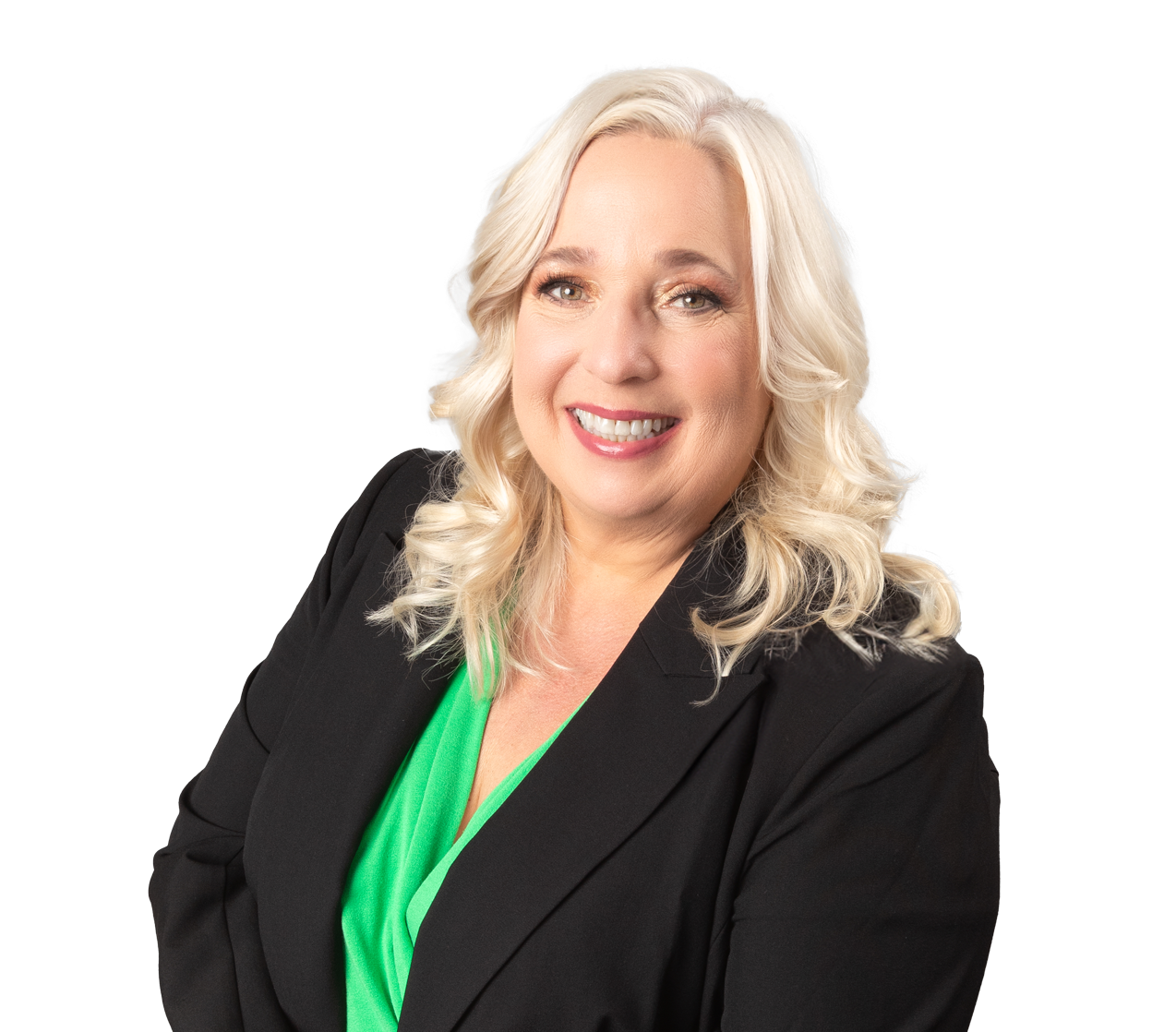
RUTH C. RHODES, ESQ.

There are 491 Board Certified Elder Law Attorneys in the State of Florida. Attorney Ruth C. Rhodes is 1 of only 2 in Brevard County.
LEARN MORE

Your Preferred Elder Law Attorneys in Melbourne, Florida

Rhodes Law can help with...

Rhodes Law, P.A. of Melbourne, FL focuses on Estate and Medicaid Planning, Asset Protection, Probate, Trust Administration, Guardianship and Guardian Advocacy.


Legal Services We Offer

With years of experience in Elder Law, the firm is proud to offer a comprehensive range of professional legal services specifically tailored to the needs of older adults and their families. Recognizing the unique challenges faced by this demographic, the team is equipped to handle various legal matters, including estate planning, guardianship, long-term care planning, and Medicaid eligibility. Their expertise ensures that clients receive not only legal counsel but also compassionate support during often-sensitive situations. By prioritizing the well-being and dignity of older adults, the firm strives to empower clients to make informed decisions about their future.


In addition to traditional Elder Law services, the firm also provides valuable resources related to health care directives and special needs trusts, addressing the diverse needs that arise as individuals age. The team understands that navigating the complex landscape of legal requirements can be daunting for families, which is why they emphasize clear communication and personalized service. By fostering strong relationships with clients, the firm seeks to build trust and provide reassurance that their loved ones are receiving the best legal advocacy possible. With a commitment to excellence in Elder Law, the firm stands ready to assist clients at every stage of life, ensuring their rights and wishes are fully protected.


With years of experience in Elder Law, we are pleased to offer a comprehensive range of professional legal services including:


Wills and Trusts 

Wills and trusts are essential legal instruments in estate planning, designed to address how an individual's assets will be managed and distributed upon their death or incapacitation. A will is a formal document that outlines a person's wishes regarding the distribution of their property, the appointment of guardians for minor children, and the execution of specific directives. Its primary function is to ensure that the deceased's assets are distributed according to their wishes, often requiring probate, a legal process that validates the will and oversees the distribution of assets. However, the probate process can be lengthy and public, potentially leading to family disputes or delays in asset distribution.


On the other hand, a trust is a more flexible arrangement that allows individuals to transfer their assets into a separate legal entity, managed by a trustee for the benefit of designated beneficiaries. Trusts can be revocable or irrevocable, with revocable trusts allowing the creator to retain control and modify the trust during their lifetime. One notable advantage of trusts is their ability to bypass probate, enabling more immediate and private distribution of assets. This can be particularly beneficial for those who wish to maintain confidentiality and minimize estate taxes, as certain types of trusts can provide tax advantages. Ultimately, both wills and trusts play a critical role in effective estate planning, accommodating differing needs and goals for asset management and distribution.


Medicaid Planning 

Medicaid planning is a strategic approach designed to help individuals and families protect their assets while ensuring eligibility for Medicaid benefits, primarily to cover long-term care costs. As healthcare expenses continue to rise, many individuals find themselves needing assistance to navigate the complexities of Medicaid eligibility rules. This planning process involves understanding both federal and state regulations, which may vary significantly, and often requires a thorough assessment of one's financial situation. By proactively arranging assets and possibly restructuring ownership, families can preserve wealth for future generations while still qualifying for the necessary healthcare benefits.


One common misconception about Medicaid planning is that it is purely about shielding assets from government scrutiny. However, it encompasses a broader perspective, including the potential need for legal and financial advice to effectively manage an individual’s estate. Techniques such as creating trusts, gifting assets, or employing spend-down strategies are often utilized to align with Medicaid’s requirements. The ultimate goal is to strike a careful balance between maintaining financial stability and gaining access to crucial medical care, ensuring that individuals can age with dignity and adequate support. Engaging in Medicaid planning well in advance of needing services can significantly enhance peace of mind for individuals and their families, ensuring they make informed decisions that align with their long-term goals.


Asset Protection

Asset protection is a crucial strategy employed by individuals and businesses to safeguard their wealth from potential risks and unforeseen liabilities. In a world where legal disputes, economic downturns, and other liabilities are commonplace, asset protection serves as a proactive measure to preserve financial stability. Professional advisors typically recommend a multifaceted approach that encompasses various strategies, including the use of legal entities such as corporations and limited liability companies (LLCs), as well as estate planning tools like trusts. By placing assets within these protective structures, individuals can effectively shield them from creditors, lawsuits, and other claims that could jeopardize their financial well-being.


Moreover, asset protection is not a one-size-fits-all solution; it requires careful planning tailored to individual circumstances and goals. Professionals emphasize the importance of a comprehensive strategy that integrates risk assessment and management. This involves not only identifying potential threats to one’s assets but also implementing measures that adjust as personal and financial situations change. For instance, someone who has recently started a business may need to adopt different protective measures compared to an individual planning for retirement. Thus, seeking guidance from experts in the field can provide a roadmap for effectively safeguarding assets while maximizing the benefits of investment and income potential. Ultimately, asset protection is about ensuring peace of mind in an uncertain world, allowing individuals and businesses to focus on growth rather than fear of loss.


Probate and Probate Litigation

Probate is a legal process that occurs after an individual passes away, aimed at settling their estate and distributing their assets according to the will or, in the absence of one, according to state laws. During probate, the appointed executor or administrator of the estate gathers the deceased's assets, pays any outstanding debts and taxes, and ultimately distributes the remaining assets to the heirs or beneficiaries. This process can be relatively straightforward or can become quite complex, depending on the size of the estate, the presence of a will, and potential disputes among heirs. The probate process typically ensures that debts are settled and the rightful heirs receive their intended inheritance, providing a structured manner for estate administration.


Probate litigation, on the other hand, refers to the disputes that arise during the probate process. This can occur for various reasons, such as challenges to the validity of a will, disagreements over asset distribution, or conflicts between executors and beneficiaries. Litigating a probate case can be a lengthy and costly endeavor, often resulting in drawn-out court proceedings. These disputes can stem from miscommunication, perceived unfair treatment, or even allegations of undue influence or fraud against the deceased. Understanding these aspects of probate and probate litigation is crucial for individuals involved in estate planning, as it highlights the importance of clear documentation and open communication among potential heirs to mitigate the risk of future legal conflicts.


Guardianship and Guardianship Litigation 

Guardianship and guardianship litigation play a crucial role in safeguarding the well-being and autonomy of individuals who may be unable to make decisions for themselves due to age, disability, or mental incapacity. Guardianship is a legal arrangement where a court appoints an individual, known as a guardian, to make personal and financial decisions on behalf of another person, referred to as the ward. This process is particularly important as it ensures that vulnerable individuals receive the care and support they require, while also providing a structured framework for their rights and interests to be protected. The court meticulously assesses each case to determine the necessity of guardianship, ensuring that the appointed guardian acts in the best interest of the ward.


Guardianship litigation, on the other hand, involves disputes related to the establishment, modification, or termination of such arrangements. This can arise from disagreements among family members, challenges to a guardian's fitness, or concerns about potential abuse or neglect. In such cases, the court is tasked with resolving these conflicts by reviewing evidence and testimony to determine the most appropriate course of action. The litigation process can be complex and emotionally charged, often requiring legal expertise to navigate the intricacies of family dynamics and state laws. Ultimately, the goal of both guardianship and its litigation is to ensure that individuals who cannot advocate for themselves receive the protection and care they need, while also preserving their dignity and rights to the greatest extent possible.


Experienced in Elder Law

When navigating the complex landscape of elder law, individuals and families often seek the guidance of experienced professionals who specialize in this niche field. Elder law encompasses a wide array of legal issues that affect senior citizens, including estate planning, guardianship, long-term care planning, and elder abuse prevention. An experienced elder law attorney understands the unique needs of aging individuals and their families, providing comprehensive support tailored to their specific circumstances. With a deep understanding of both state and federal laws, these professionals are equipped to help clients make informed decisions that safeguard their rights and assets.


An attorney specializing in elder law not only possesses expertise in legal matters but also approaches cases with compassion and empathy. They recognize the emotional challenges faced by older clients and their families, including the issues surrounding healthcare, financial stability, and the potential for diminished capacity. By offering personalized legal strategies, these attorneys help clients navigate difficult discussions about end-of-life care, financial management, and the intricacies of Medicaid and Medicare. Ultimately, an experienced elder law attorney serves as a trusted advocate, ensuring that seniors receive the dignity and respect they deserve while protecting their interests throughout the aging process.


Arrange a Free Consultation Today

The Elder Law Attorneys at Rhodes Law are dedicated to providing excellent legal advice, strategy and planning to seniors, individuals and families in our Florida community. Call our trusted team today to find out how we can help you.


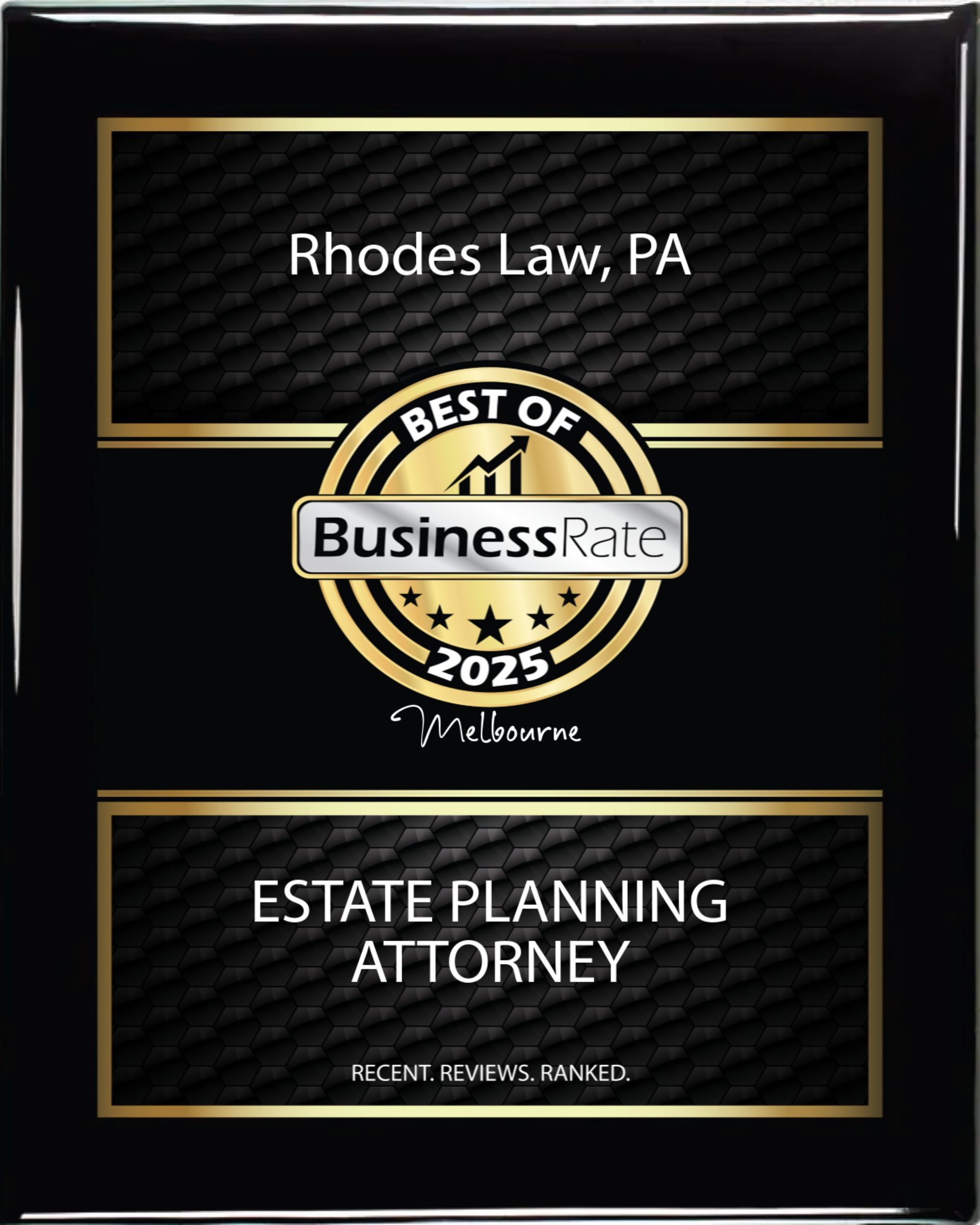
Viewed as one of the best legal firms in the Melbourne area by clients, to provide families the legal help they require.

Rhodes Law, P.A. is dedicated to helping seniors, individuals and families in our community with experienced legal advice, strategy and planning.


Our Elder Law Attorneys are focused on Brevard, FL seniors delivering the best strategy and planning for Florida families.


No matter the reason for your consultation, Rhodes Law, P.A. will spend the time needed to discuss and evaluate the facts and applicable law for your situation. We will provide you with the tools you need to make educated decisions for achieving your best possible outcome.

BOOK A CONSULTATION

Satisfied Clients

quotes2Artboard 2

"I have the pleasure of working with an amazing team at Rhodes Law, P.A. Ms. Rhodes also prepared all of my estate planning and the planning for my children too! I would never trust my estate planning to anyone else!"


NICHOLETTE G.

"I am very satisfied with the professionalism and how fast they were able to handle my case. I recommend this firm to anyone who needs legal assistance."


IRIS D.

"I highly recommend Attorney Ruth Rhodes.  Very professional and very knowledgeable on all Elder Law in every situation. I have referred her many of times. I have tremendous faith and trust in Miss Rhodes. I highly recommend her to any family."


ROSE C.  COMFORTS OF HOMECARE


Meet Melbourne's Elder Law Attorney

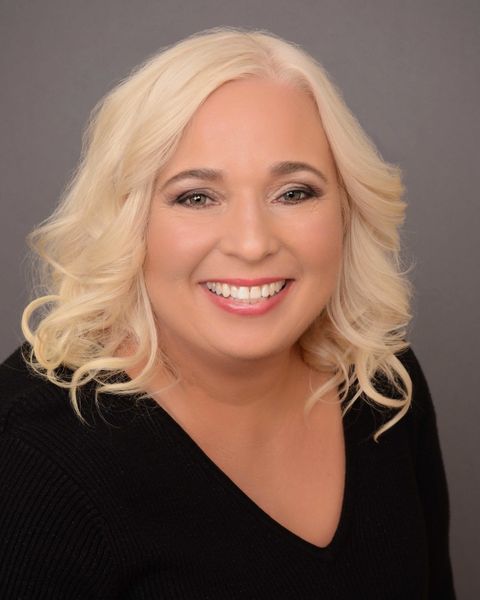
Ruth C. Rhodes

Attorney Ruth C. Rhodes is the owner of Rhodes Law, P.A., a Helping Seniors of Brevard Board Member and Brevard Alzheimer’s Foundation Board Member, and a resident business at One Senior Place.


She graduated Valedictorian from the College of Law at Florida A&M University, and has more than 23 years of experience working in the legal field with more than 15 years as a practicing attorney.

READ MORE

News & Events

Visit our blog for more information on Elder Law and our upcoming events.

December 2, 2025
Estate planning is one of the most important steps you can take to protect your assets, provide for loved ones, and ensure your wishes are honored. Yet many people wonder: Do you really need an attorney to create an estate plan? The short answer is not always—but in many situations, having an experienced estate planning attorney can make a significant difference. Let’s explore both sides so you can make an informed decision. What Is Estate Planning? Estate planning involves preparing legal documents that outline how your assets, healthcare decisions, and responsibilities should be handled if you become incapacitated or pass away. This often includes: A will A trust Power of attorney Healthcare directives Guardianship designations Beneficiary planning These tools help minimize conflict, reduce taxes and fees, and ensure your wishes are carried out smoothly. Can You Do Your Own Estate Planning? Technically, yes. Many basic estate planning documents can be created without an attorney through online platforms or fill-in-the-blank forms. DIY Estate Planning May Be Sufficient If: You have a small or simple estate You have straightforward wishes You don’t own property in multiple states You don’t have significant investments or business assets You're comfortable using online legal templates For some people, a simple will or beneficiary designation may be enough—and these can be done without legal representation. However, DIY estate planning does come with risks. The Risks of Doing Estate Planning Without an Attorney Estate planning laws vary widely from state to state, and small mistakes can create big problems. Errors often aren't discovered until it’s too late—when loved ones are already dealing with grief and legal complications. Common Risks Include: Documents that are not legally valid Improper witnessing or notarization Conflicts between documents (for example, a will vs. a beneficiary form) Unintended tax consequences Leaving assets unprotected Creating confusion or disputes among heirs Failing to plan for incapacity Even a minor oversight can lead to expensive court involvement, delays, and family conflicts. When You Should Hire an Estate Planning Attorney Working with an attorney is especially important if your situation is more complex or if you want full peace of mind. An Attorney Is Strongly Recommended If: You own multiple properties or a business You are part of a blended family You have minor children or dependents with special needs You want to create a trust You expect potential family conflict You have significant assets You want to reduce estate taxes or protect assets long-term You’re unsure how to structure your plan An attorney can help you avoid mistakes, ensure your documents comply with state law, and customize your plan to your needs—something DIY documents cannot do. Benefits of Working With an Estate Planning Attorney Personalized Guidance An attorney helps you clarify your goals and creates a plan that aligns with your specific financial, family, and medical needs. Legal Expertise Estate laws change, and a lawyer ensures your plan remains compliant and effective. Comprehensive Planning Beyond a will, an attorney helps you create a full plan that covers incapacity, healthcare decisions, asset protection, and more. Reduced Stress for Loved Ones A proper legal plan helps prevent confusion, delays, and financial burdens for your family. Long-Term Support Attorneys can update your documents as life changes—marriage, divorce, children, new assets, and more. So, Do You Have to Hire an Attorney? No—you are not legally required to hire an attorney for estate planning. But should you? That depends on your goals and the complexity of your situation. For simple estates, DIY options might be enough. For anything more involved—or if you simply want the reassurance of knowing everything is done correctly—an attorney offers valuable protection and peace of mind. Final Thoughts Estate planning is more than just paperwork—it’s a gift of clarity and security for the people you care about most. Whether you choose to create your documents on your own or work with an attorney, the most important step is simply getting started. Although Florida doesn’t require an attorney for estate planning, working with one is highly recommended. An attorney can ensure your documents are legally sound, reflect your wishes clearly, and comply with Florida law. So, call Rhodes Law, P.A. at 321-610-4542 and help to safeguard your interests and minimize the potential for disputes among heirs.
November 16, 2025
Medicaid: Who Is Eligible? Good question. It depends — there's no single “Medicaid age” that applies to everyone. Eligibility depends on income , age , state , whether you’re a parent , disability , etc. Here’s how it generally works and how you can sign up. Who Is Eligible for Medicaid Medicaid covers: children, low-income adults, pregnant women, people with disabilities, and older adults. ( USAGov ) Under the Affordable Care Act (ACA), many states have expanded Medicaid to cover most low-income adults under age 65. ( Medicaid ) For people 65+ or those who are disabled, there are different rules (often linked to Social Security/SSI). ( Medicaid ) Non-financial eligibility also matters: you typically need to be a resident of the state you’re applying in. ( Medicaid ) At What Age Can You Sign Up Children : Medicaid (or CHIP) often covers children up through their teen years, depending on state income limits. ( Medicaid ) Adults under 65 : If your state has expanded Medicaid, adults under 65 with low income may qualify. ( Medicaid ) 65 and older : Older adults with low income can also qualify, sometimes in combination with Medicare. ( Medicare.org ) Disability : If you have a qualifying disability, you might be eligible at any adult age. ( Medicaid ) How to Sign Up for Medicaid Here are the main steps to apply: Check Your State’s Medicaid Agency Since Medicaid is run by states, the first place to check is your state Medicaid office. ( USAGov ) Apply Through the Health Insurance Marketplace You can apply via HealthCare.gov . If someone in your household might qualify, your application can be forwarded to your state’s Medicaid agency. ( HealthCare.gov ) Call the Marketplace at 1-800-318-2596 if you want help. ( HHS ) Apply Directly Through Your State Many states let you apply online, by mail, over the phone, or in person at a local Medicaid office. ( ACL ) You’ll need documents like: name, date of birth, Social Security number, proof of income, proof of citizenship or legal residency, proof of state residence. ( USAGov ) What Happens After You Apply Once you're found eligible, coverage can start either on the date of application or at the beginning of that month, depending on your state. ( Medicaid ) In many places, Medicaid can cover you retroactively (for up to 3 months before you applied) if you were eligible during that time. ( Medicaid ) Things to Watch Out For State Differences : Because rules vary by state, what qualifies in Florida (or wherever you are) might be different than in another state. Renewal : Medicaid coverage isn’t always permanent — you may have to renew periodically. ( USAGov ) Documentation : Missing paperwork can delay your application. Make sure you gather all required documents before you apply. Get Help : If the process seems confusing, you can get help from “navigators” or local health‑care assistance organizations. Medicaid is a medical assistance program that ensures access to healthcare for low-income individuals and families. It also helps seniors and people with disabilities cover the costs of skilled nursing care, as well as other medical and long-term care expenses. Ruth C. Rhodes provides guidance to clients on qualifying for, obtaining, and maintaining Medicaid benefits. She employs a variety of legal strategies and instruments designed to protect and preserve assets while maintaining Medicaid eligibility. Ruth advises clients on the most suitable long-term care and living arrangements for their specific circumstances. Additionally, she creates personalized plans for clients and their families, helping them manage personal and financial resources effectively to achieve their long-term goals as their loved ones age. For assistance, call Rhodes Law, P.A. at 321-610-4542 and let Ruth and her team create a personalized plan for you and your family!
October 3, 2025
When most people think of estate planning, they imagine wills, trusts, and dividing up assets among human beneficiaries. But for many of us, pets are more than just animals — they’re beloved family members. Unfortunately, in the eyes of the law, pets are still considered property. That means if you don't have a plan in place, your pet’s future could be uncertain. Let’s talk about how to include your pets in your estate plan, so they continue to receive the love and care they deserve, no matter what the future holds. Why Pet Estate Planning Matters Imagine you're suddenly hospitalized or pass away unexpectedly. Who will feed your cat? Walk your dog? Ensure your parrot’s special diet is maintained? Without clear instructions, even well-meaning family members may not be prepared — or willing — to take over. Worse, your pet could end up in a shelter or with someone unfamiliar. Estate planning for pets gives you peace of mind, knowing there’s a formal plan to protect them. Key Steps to Include Pets in Your Estate Plan - Choose a Pet Caregiver Designate someone who is willing and able to care for your pet. Always ask first — never assume someone wants the responsibility. It's a good idea to name a backup caregiver, too, in case your first choice can’t fulfill the role. - Include Pet Care Instructions Write down essential care details, such as: Food preferences and routines Medical conditions and vet contacts Exercise and grooming needs Behavioral quirks Keep these instructions in a safe place and update them regularly. Your will or trust can reference this document. - Set Aside Funds for Pet Care You can leave money specifically for the care of your pet. Consider how much will be needed based on: Your pet’s age and life expectancy Vet costs Grooming, food, medications Emergency care - Create a Pet Trust A pet trust is a legally binding arrangement that allows you to: Appoint a trustee to manage funds Assign a caregiver Outline specific care instructions Require regular check-ins or updates Unlike a will, a pet trust can take effect while you're still alive (e.g., if you become incapacitated). It offers more control and legal enforceability than simply leaving money in a will. What Happens if You Don't Plan? Without a plan: Your pet may be treated like personal property and passed to your next of kin (who may not want the responsibility). If no one steps forward, your pet could end up in a shelter. There's no guarantee of how — or if — your pet will be cared for according to your wishes. Common Mistakes to Avoid Not telling your family or executor about your pet care wishes Assuming verbal promises are enough Failing to update your plan if your pet passes away or you get a new one Leaving money directly to your pet (not legally possible — you must assign it to a human or a trust) Your pets give you unconditional love — estate planning is one way to return the favor. With a few thoughtful steps, you can ensure they live safe, happy lives even if you’re no longer around to care for them. Speak with an estate planning attorney familiar with pet trusts in your state. It's one of the most compassionate decisions you can make for your furry, feathered, or scaly family members. Need Help Getting Started? Contact Ruth Rhodes at Rhodes Law, P.A. ! We specialize in estate planning for pets offering comprehensive legal solutions. Make sure your pet continues to receive the love and care they deserve. Call us at (321) 610-4542 and schedule your consultation today!
September 30, 2025
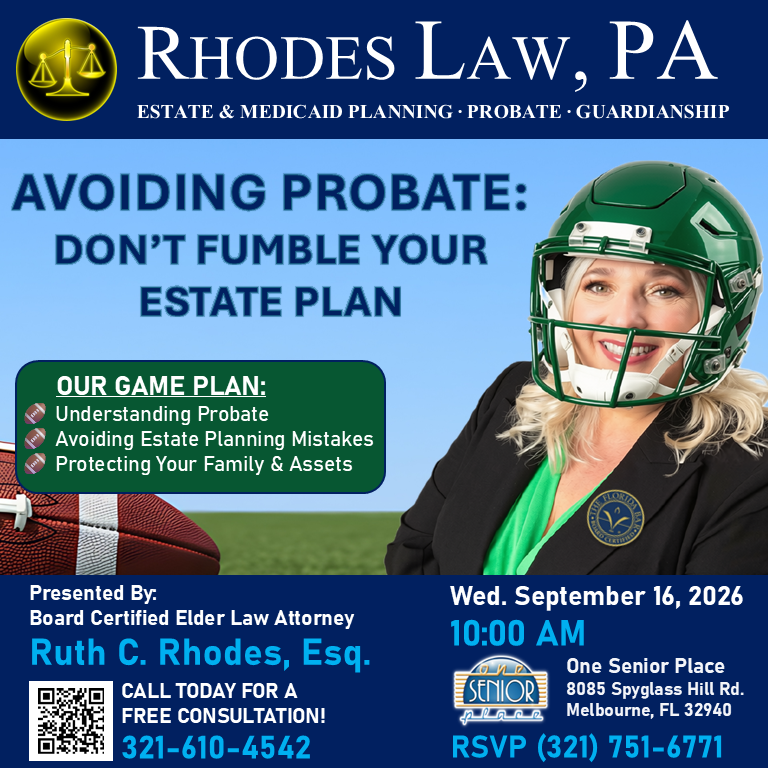
Planning for Pets: Caring for Furry Family Members Wednesday October 15th 10am-11am One Senior Place 8085 Spyglass Hill Rd, Viera, FL 32940 RSVP at 321-751-6771 (OSP) or https://www.eventbrite.com/e/planning-for-pets-caring-for-furry-family-members-tickets-1708053356569?aff=erelexpmlt
Show More